
Pro Tools for Musicians and Songwriters
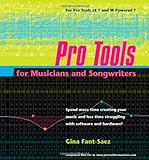
You’ve got the power. You don’t have to spend thousands of dollars on recording-studio time anymore. Now, using Pro Tools—a digital-audio workstation—you can record demos at home on your own computer, edit tracks, add effects, and even output songs to a CD. But if you’re new to working with sound digitally, you face a daunting learning curve. Getting your music gear to work with your desktop computer or laptop—and producing results that you like—involves some unfamiliar tool

List Price: $ 54.99
Price: [wpramaprice asin=”0321337034″]
[wpramareviews asin=”0321337034″]
1 of a kind book on Pro Tools showing details of useful tasks,
Pro Tools is a Digital Audio Workstation by Digidesign for music production and digital audio editing. It is widely used to create audio for film, television, and music and serves as the de facto standard in those industries. As one of the first programs to provide CD-quality (16-bit and 44.1 kHz) multitrack editing on a personal computer, use of Pro Tools has quickly grown in the sound recording field. It originally became popular because of its simple, streamlined interface for non-linear, non-destructive audio editing. This appealed to analog producers making the switch to computer-based production. Thus, now just about anyone can have the power of a recording studio on their personal computer, thus eliminating much of the need for expensive professional recording time.
Most books on Pro Tools are really dumbed down and basically just show you what interfaces and controls do what without giving you the big picture. None of them up to this book show artists how to use this computing package to assist them in their craft. I really liked this book’s readable style coupled with useful graphics on all of the controls, as well as tips on recording techniques. It is suitable for Pro Tools novices as well as those already familiar with the controls since the book takes you from the basics into adding your own plug-ins, working with MIDI, arranging and recording your own music, and finally exporting your music to CD or to the Internet.
I notice that Amazon does not show the table of contents, so I do that here. As you can see from the table of contents, much of the book concentrates on exercises so that you get plenty of hands-on experience.
1: GETTING STARTED 2
The First Step 3
EXERCISE 1: Start a New Session 3
Fasten Your Seatbelts 9
EXERCISE 2: Create Your First Track 9
EXERCISE 3: Add Your First Plug-in 12
EXERCISE 4: Change the Click Sound and Volume 14
EXERCISE 5: Change the Tempo 17
EXERCISE 6: Get to Know the Ruler Timeline 18
Wrap Up 19
2: LOOPS & RECORDING 20
The Upside of Downloading 21
EXERCISE 1: Download Loops 21
EXERCISE 2: Import Loops into Pro Tools 24
EXERCISE 3: Resize and Move Tracks 26
EXERCISE 4: Mute, Solo, Pan, and Volume 29
EXERCISE 5: Repeat Audio Loops 31
Intro to Recording 34
EXERCISE 6: Prepare to Record 35
EXERCISE 7: Record Your Track 40
EXERCISE 8: Punch In and Punch Out 44
Manually
EXERCISE 9: Automated Punch-In and 45
Punch-Out
Wrap Up 48
3: THE EDIT WINDOW 50
EXERCISE 1: Import Audio a New Way 51
EXERCISE 2: Use the Zoomer 55
EXERCISE 3: Use the Grabber in Grid Mode 60
EXERCISE 4: Create a Snare Track and a Hi-Hat Track 66
EXERCISE 5: Use the Trimmer with Slip Mode and Spot Mode 73
EXERCISE 6: Change Timebase 80
EXERCISE 7: Use the TCE Trimmer 84
EXERCISE 8: Use Shuffle Mode 88
Wrap Up 94
4: PLAYLISTS & MARKERS 96
EXERCISE 1: Use Save Copy In 97
Working with Playlists 100
EXERCISE 2: Record with Playlists 101
EXERCISE 3: Record Four Playlists 105
EXERCISE 4: Create a Composite with Playlists 109
Markers and Memory Locations 114
EXERCISE 5: Create and Use Markers and Memory Locations 114
The Secret to Doubling 118
EXERCISE 6: Try Out Doubling 118
Wrap Up 123
5: USING PLUG-INS 124
Two Types of Plug-Ins 125
The Anatomy of an EQ 126
EXERCISE 1: Add a 1-Band EQ 127
EXERCISE 2: Repair the Snare 132
EXERCISE 3: Add More EQ 135
EXERCISE 4: Copy, Mute, and Move Plug-ins 142
Wrap Up 144
6: INSERTS & BUSSES 146
EXERCISE 1: Use a Reverb as an Insert (the Wrong Way) 147
EXERCISE 2: Use Reverb on a Bus (the Right Way) 153
EXERCISE 3: Remove Inserts and Sends 158
EXERCISE 4: Name Your Busses 160
EXERCISE 5: Use a Delay 164
EXERCISE 6: Use Solo Safe 170
Compression 172
EXERCISE 7: Tackle the Compression Plug-in 173
Wrap Up 179
7: MIDI TRACKS 110
EXERCISE 1: Download and Install SampleTank Free 181
EXERCISE 2: Download SampleTank Sounds 187
What Is SampleTank? 190
About Virtual Instruments 191
EXERCISE 3: Testing MIDI, 1 2 3 191
EXERCISE 4: Authorize SampleTank 194
EXERCISE 5: SampleTank and Instrument Tracks 197
EXERCISE 6: Record Multiple MIDI Tracks 202
EXERCISE 7: Record a Bass Line 209
Wrap Up 215
8: MORE ON MIDI 216
EXERCISE 1: Set Up a Keyboard Track 217
EXERCISE 2: Change the Song Start Time and Create a Count-Off 219
EXERCISE 3: Adjust Real-lime Properties 222
EXERCISE 4: Edit MIDI Properties…
Read more
Was this review helpful to you?

|Best for Pro Tools…,
I won’t go into detail about the contents of this book, as that has already been done by other reviewers. This book has a pleasant style, well thought out tutorials, great graphics, and goes beyond the call of duty into the “intermediate user” territory towards the end. A highly valuable resource!
That said, I have to disagree in a big way with some of Gina’s editorial about Production techniques. From the beginning, she says to ONLY record with drummers using a click track. In fact, she goes as far to say that if your drummer will not play to a click, then get a new drummer! I think that this advice is ludicrous. She also claims that over 90% of production today is done to a click track! Maybe electronic music…but NOT rock n’ roll, baby! Not at all. Ask Matt Cameron, the Rolling Stones, Ringo Starr, AC/DC, Jet, etc… what they think about click tracks…it has been documented in texts by engineers and others that these guys/girls DO NOT use click tracks…I just hope that her statements in this book do not kill someone’s idea or dream of drumming just because they choose to be “organic” and to have a sound that “lives and breathes” instead of rigidly following some synthetic crystal-controlled machine…
Off of soapbox now, I can highly recommend this book!
0
Was this review helpful to you?

|