
Making Beats: The Art of Sample-Based Hip-Hop (Music Culture)
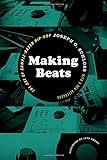
Based on ten years of research among hip-hop producers, Making Beats was the first work of scholarship to explore the goals, methods, and values of a surprisingly insular community. Focusing on a variety of subjects—from hip-hop artists’ pedagogical methods to the Afrodiasporic roots of the sampling process to the social significance of “digging” for rare records—Joseph G. Schloss examines the way hip-hop artists have managed to create a form of expression that reflects their creative

List Price: $ 24.95
Price: [wpramaprice asin=”0819574813″]
[wpramareviews asin=”0819574813″]
Making Beats: Skill Pack
- Brand Name: Pitch, Richy Mfg#: 9781598638806
- Shipping Weight: 2.35 lbs
- Manufacturer:
- Genre:
- All music products are properly licensed and guaranteed authentic.
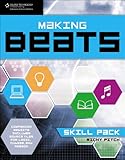
MAKING BEATS: SKILL PACK teaches you how to make infectious modern beats from start to finish using popular beat making software such as Native Instruments Battery, Apple Logic Pro, Steinberg Cubase, Propellerhead ReCycle, Audacity, and others. This book explains the detailed process of beat making, what tools make a beat stand out, and how to use digital audio workstations to develop beats and loops that will make listeners nod their heads. You’ll learn to edit, play, sequence, quantize, layer,
List Price: $ 39.99
Price: [wpramaprice asin=”1598638807″]
[wpramareviews asin=”1598638807″]
Finally someone gets it right,
I think this book gets it right.
But the title of this book is misleading. It’s not a how-to book on making hip hop beats.
It’s an ethnographic study on hip hop producers, most of which are underground/college radio hip hop makers.
So chances are most Amazon customers won’t know the names of the producers, or even be able to recognize any of their songs.
But if you know names like Paul C, Diamond D, Showbiz, Pete Rock, Premier, Dilla, Marley Marl, Supreme, Soulman, Dj Muro – this book is really good.
There are a lot of insider issues that producers talk about between themselves, but never really get into the main hip hop discussion, and so it has no chance of getting into the mainstream.
Joe decided to look at producers and ask these questions. He interviewed folks like Dj Kool Akiem (of the Micranauts), Vitamin D, Domino of Hieroglyphics, and he asks questions like
– Why do you need to sample, why not just replay the sample?
– What’s the big deal with reissues?
– Producers who didn’t start out as Dj’s
– Will you sample from a rap record?
If you’re just a hip hop head, the quotes from producers are probably the most interesting part of the book. You really get to look into 1 school of thought on how to make beats.
If you’re an academic, it’s got plenty of footnotes, and lots of support for his ideas.
For me, I think the best part of the book was the literature review. He looks at a lot of the bigger books on the subject of hip hop and breaks them down as to why they don’t make sense.
The only problem I really see with the book, is that it focuses on a certain type of producer. Sample based, means sampled from vinyl. You won’t find a “keyboard” producer. You won’t find producers that make g-rap type beats. (Mannie Fresh type of producer). It’s very biased towards an underground, old east coast sound 89-93 era, aesthetic. Which is all the more interesting since he’s based on the West Coast.
0
Was this review helpful to you?

|a refreshing look at hip hop production as aesthetic rather than ironic,
Perhaps my favorite aspect of this book was that it denies all the nonsense that other writers have asserted about hip-hop’s use of sampling as only an ironic way of referencing the past. This book instead puts forth the idea, which I agree with as a music producer, that sounds are chosen because they simply sound pleasing when combined with one another. In this respect, sampled-based hip-hop is really no different from many types of electronic music: Compositions are built up by putting sounds into the mix that work well with what is already there, and this process continues until you have some kind of groove or atmosphere established. All this patronizing stuff about hip-hop producers all being street philosophers from the school of hard knocks needs to stop. The truth is that they are composers like the rest of us, and they dig stuff that sounds good in their tracks. Thus, I highly recommend this book to anyone wanting to read about the nature of sample-based hip-hop as a musical genre rather than as purely a method of recontextualizing the past to pay some mystical homage to those who came before. A refreshing, realistic book that gives proper respect and validity to a genre that is too often misunderstood and marginalized.
0
Was this review helpful to you?

|Depends on Your Purpose,
0
Was this review helpful to you?

|A very interesting book!,
0
Was this review helpful to you?

|GREAT BOOK,
0
Was this review helpful to you?

|Read the table of contents,
Each section repeats for owners of three different DAWS.
Targeting a very broad audience, I can only imagine everyone who bought this book was mislead in doing so and ended up disappointed.
I didn’t buy it myself, just wanted to warn people against it, unless of course you use these three specific DAWS and you are a novice at making beats in all of them.
Find something else.
0
Was this review helpful to you?

|