
Rhythm, Love and Soul

This live DVD serves as the companion to the highly successful PBS concert pledge special and CD box set. This event captures the greatest R&B performers and their music in a truly unforgettable live setting. Rhythm, Love & Soul is another great success from the American Soundtrack series of shows produced by Pittsburgh PBS station WQED, and Shout! Factory’s Richard and Garson Foos. Comes in 5.1 surround sound or pristine PCM stereo. Includes 3 songs from Aretha Franklin in a rare TV appearan

List Price: $ 14.98
Price: [wpramaprice asin=”B0000CEB6P”]
[wpramareviews asin=”B0000CEB6P”]
Sweet Soul Music: Rhythm and Blues and the Southern Dream of Freedom
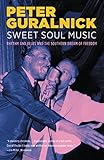
This masterful exploration of American roots music–country, rockabilly, and the blues–spotlights the artists who created a distinctly American sound, including Ernest Tubb, Bobby “Blue” Bland, Elvis Presley, Merle Haggard, and Sleepy LaBeef. In incisive portraits based on searching interviews with these legendary performers, Peter Guralnick captures the boundless passion that drove these men to music-making and that kept them determinedly, and sometimes almost desperately, on the road.
List Price: $ 19.00
Price: [wpramaprice asin=”0316332739″]
[wpramareviews asin=”0316332739″]
Find More Soul Music Products
Very Pleased,
0
Was this review helpful to you?

|Great but what about Vol.2?,
Now they can see what true talent and great singing is about…
Thanks PBS for putting together such a great show with a great orchestra too…
Now I saw that program when it was aired and it was longer (including performances by Chic, The Trammps and many more), and the title of this DVD says Vol.1… so there’s gotta be a Vol.2 in the pipe… Please don’t make us wait too long!!!
I’m already in line with my credit card…
Wonder B
0
Was this review helpful to you?

|Fantastic Soul,
0
Was this review helpful to you?

|Labor of Love,
Guralnick provides plenty of background on the “race music” that spawned R&B and the great soul music of the sixties and early seventies, on which much of the book concentrates. Like most, if not all, of the great blues musicians, the early pioneers of soul came from humble, mostly southern beginnings, and made little or no money from their work, which was liberally sampled by white musicians.
A good portion of the narrative revolves around the fascinating rise and fall of Stax Records, the tiny Memphis-based label that brought together white executive leadership and musicians with raw black talent from the South. Despite initially primitive recording conditions, Stax developed into a powerhouse that was home to some of the greatest musicians in soul music, from Otis Redding to William Bell to Carla Thomas to Sam and Dave to Johnny Taylor. The label became representative of the growing sense of black pride that defined the era, one in which civil rights, of course, moved to the forefront of America’s consciousness.
All of these musicians and many more, including Aretha Franklin, Wilson Pickett and James Brown, to name a few, are given finely drawn profiles by Guralnick, and he treats their contributions to American music with the respect that they deserve. Throughout, he is intent on letting the artists tell their stories in their own words, and remains content to use his own fine writing to direct and bind together the narrative.
Another great accomplishment of the book, for me, was Guralnick’s successful effort to illuminate the ties between white and black musicians during this period. Yes, many of the most successful producers, notably Atlantic’s Jerry Wexler, were white, but so were many of the musicians. Most had grown up in the south around blacks and were intimately familiar with African-American music. The Stax house band, which included Steve Cropper and Donald Dunn, was white, and they performed on many songs penned by great black songwriters such as David Porter and Isaac Hayes. Think of the great, ominous organ introduction to Aretha Franklin’s “I Ain’t Never Loved a Man.” The white player is Spooner Oldham. This musical cross-fertilization is a notable point, one not often brought into considerations of the era.
As a young kid coming up in the mid-60s, I loved the music that Guralnick writes about here, and I could tell — even if he hadn’t said so — that he did too. He goes beyond that love to really dig into its roots and understand it, and succeeds admirably.
0
Was this review helpful to you?

|I Think the Book Ends Before its Climax,
Guralnick’s thesis seems to be that Southern Soul achieved its great creative flowering in the 60s as a result of the partnership between black and white musicians, and even though he interviews a great number of musicians and businessmen – black and white – he can’t help himself from empathising with the young white hipsters that made up the house bands at Stax and Muscle Shoals, with the result that the book becomes very much a story told from their point of view (Guralnick calls Dan Penn the “secret hero of this book” – fair enough, but surely James Brown should have been its overt hero). After these white musicians were intimidated out of the business during the racial tension that followed Martin Luther King’s assassination in 1968, Guralnick concentrates more on the politics and seems to lose interest in the music itself.
Which is a great pity, since Southern Soul in the 70s went on to even greater heights (James Brown’s rhythmic revolution, then Al Green’s great synthesis of the sexual and the spiritual). Though I learnt a great deal from the book (my CD collection has mushroomed after reading it) it felt to this reader as though the book had ended just before its real climax.
0
Was this review helpful to you?

|Almost as good as Guralnick’s Elvis book.,
0
Was this review helpful to you?

|